Foundation Repair in Pittsburgh: Bowing Walls, Settling and Slopes
Foundation repair in Pittsburgh covers two different problems: walls pushed in by wet soil, and houses or yards moving with the slope. The fixes, and the people you should ask first, differ.
Bowing basement walls in Pittsburgh usually come from wet soil pushing on block or brick; HomeGuide (2026) puts bowed wall repair at $5,000–$15,000 and settling repairs at $4,500–$20,000. Where the slope itself is moving, start with a structural or geotechnical engineer ($500–$3,000 for a report).
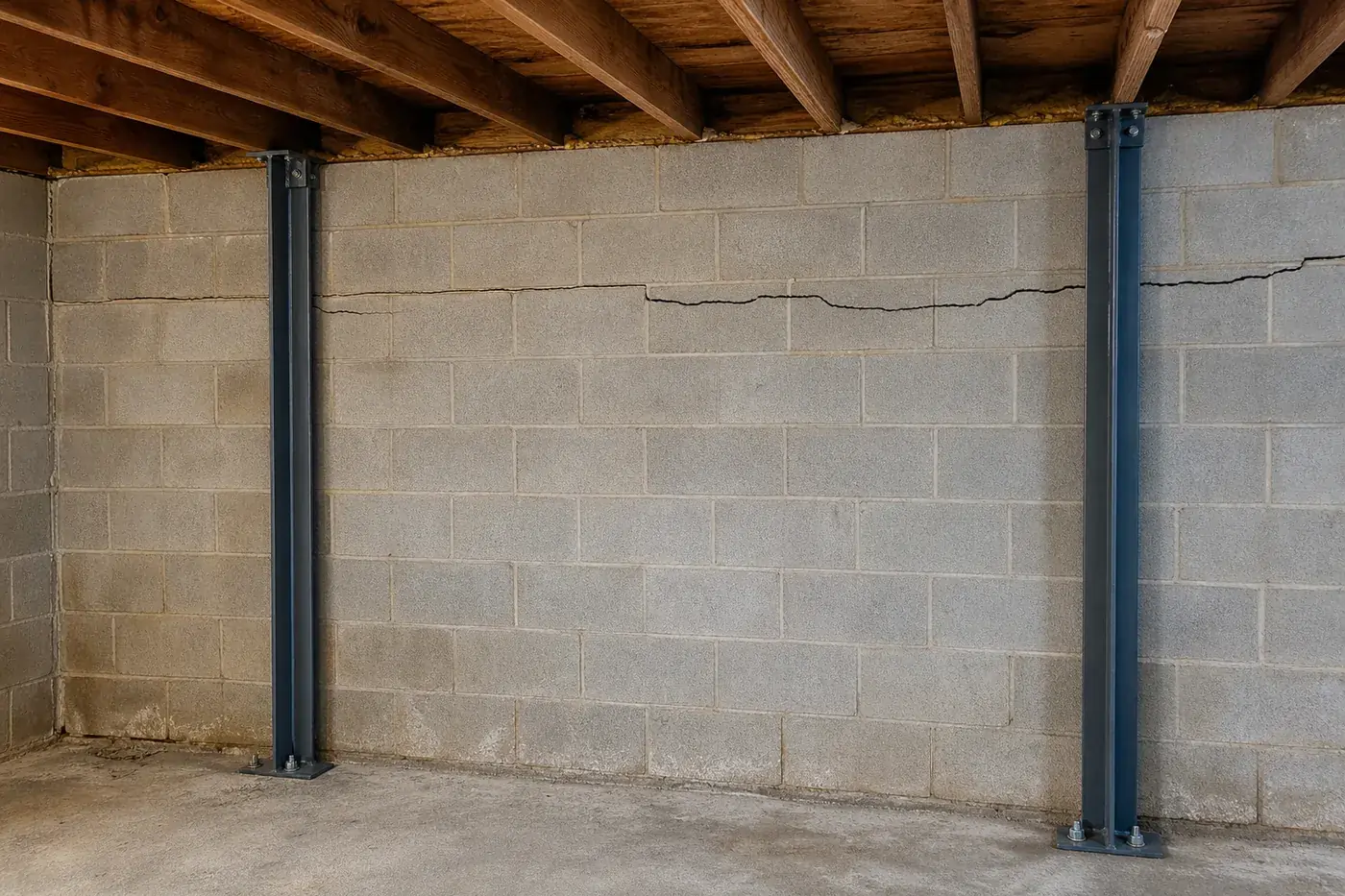
Which foundation cracks mean movement?
- Horizontal cracks along a block wall, often a few courses below grade, mean soil pressure is pushing it in.
- Stair-step cracks through mortar joints in block or brick point to settlement or pressure at a corner.
- A wall leaning in at mid-height, or a gap opening at the top plate, means it is moving now.
- Thin vertical cracks in poured concrete are common shrinkage; they matter mainly if they leak or widen.
HomeGuide puts minor crack repair at $250–$800 and major wall repairs at $2,500–$25,000.
How do Pittsburgh's slopes figure in?
Pennsylvania's Bureau of Geological Survey says southwestern Pennsylvania has by far the highest concentration of landslides in the state. The U.S. Geological Survey's Allegheny County work found that most areas with moderate to severe slope stability problems sit on the red mudstone known as the Pittsburgh redbeds, which weathers rapidly when exposed to air and water. USGS also noted that houses with foundations set into that bedrock appeared to stand as well as others, while driveways, sidewalks and patios built on its soil were the ones that moved. In short: a cracked patio or retaining wall on a slope is not always a foundation problem, but it is worth having looked at.
What are the repair options?
- Wall anchors or steel braces for bowing walls; HomeGuide puts stabilization at $5,000–$10,000.
- Carbon fiber straps for walls with modest inward movement.
- Piers or underpinning for settling corners and footings, $10,000–$30,000 or more for underpinning (HomeGuide).
- Drainage to remove the water pressure that started the problem, often done at the same time; see hillside wall leaks.
Permits, registration and the engineer
HomeGuide notes that most foundation repairs count as structural and need a permit. In the City of Pittsburgh, residential alteration permits for owner-occupied homes go to contractors registered with the Pennsylvania Attorney General as home improvement contractors (Pittsburgh Permits, Licenses and Inspections). For a moving wall or a house on an unstable slope, an engineer's report before choosing a repair is money well spent. Every price is in the Pittsburgh cost guide.
Questions homeowners ask
Should an engineer see a bowing wall before I hire a contractor?
It is a good idea, especially on a hillside. An independent structural engineer can say how far the wall has moved, whether anchors, braces or a rebuild fit, and whether the slope is part of the problem. HomeGuide puts an engineer's report at $500 to $3,000, small next to a $5,000 to $15,000 wall repair.
Where is the water getting in?
A sentence or two helps: water along the uphill wall after rain, a stone wall shedding sand, a sump that runs all spring, a crack that has grown. One independent basement specialist who works in Pittsburgh will get in touch.