Water, Crust, Sand and Cracks: Reading a Pittsburgh Basement
Most people do not search for waterproofing first; they search for what they see. Find your sign below. The short answer comes first, then the page that covers the fix.
In Pittsburgh basements, water along the floor joint of one wall usually means uphill drainage. White crust is mineral residue from water moving through masonry. Sand falling from a stone wall means mortar is washing out. A horizontal crack in block means pressure, not just moisture, and needs a structural look.
Water along the bottom of one wall
Usually groundwater pushed against the uphill wall, entering at the cove joint where the wall meets the floor. It shows up hours after heavy rain, not during it. Gutters and grading first, then an interior drain along that wall; see hillside wall leaks.
White, chalky crust on the walls
Efflorescence: salts left behind when water moves through masonry and evaporates. It is not mold and it is not structural, but it shows where water is getting through. Brush it off and watch whether it returns.
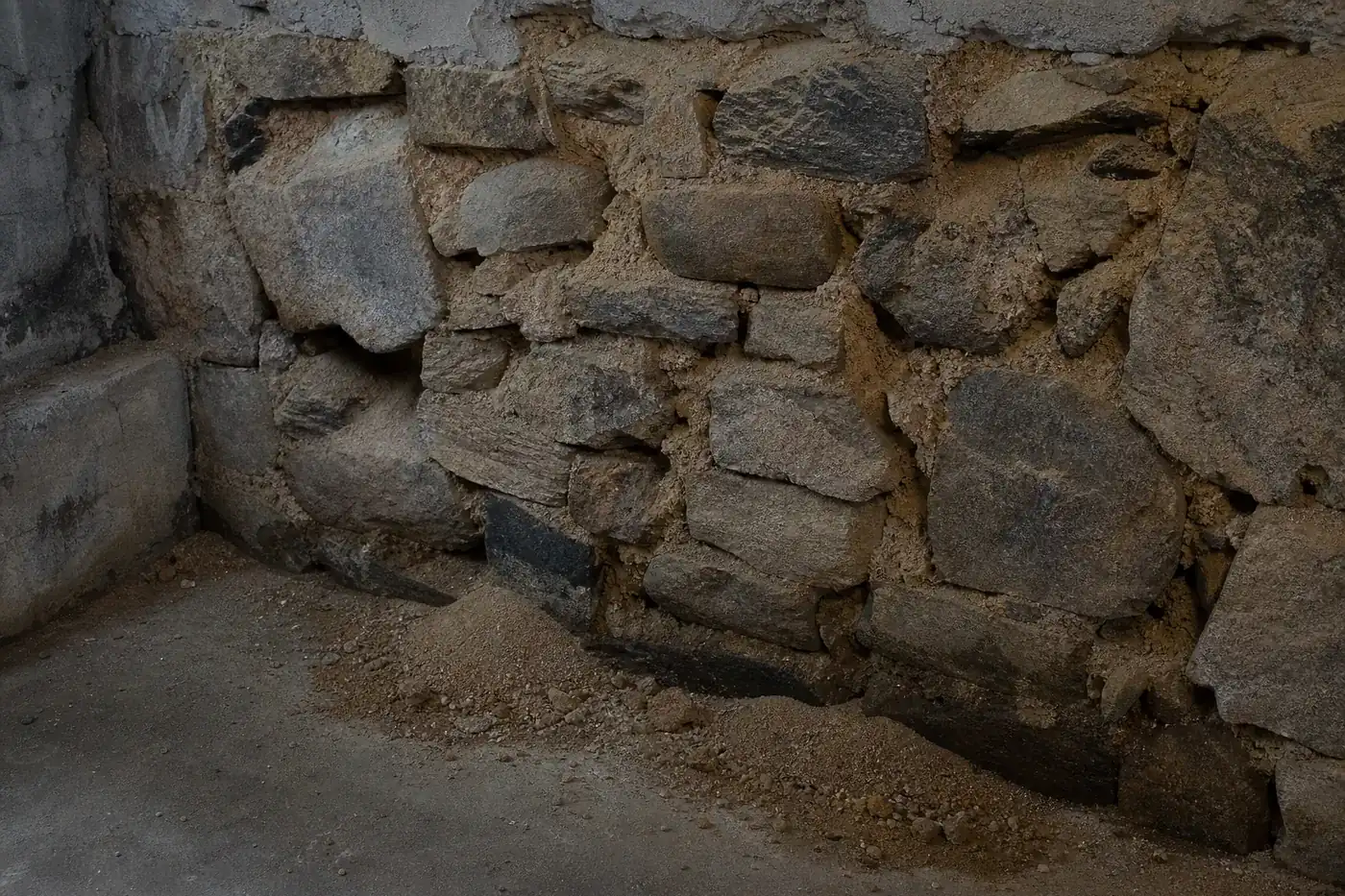
Sand on the floor below a stone wall
Lime mortar in older stone foundations softens and washes out when water keeps moving through it. A little is normal in an old house; piles that return quickly, or stones that move, mean the wall needs repointing and the water behind it needs a way out.
A horizontal crack in a block wall
A sign of soil pressure pushing the wall inward, especially if the wall bows at that line. This is a foundation repair question first and a waterproofing question second. Measure and photograph it now so you can tell if it grows.
Musty smell but no visible water
Damp walls and high humidity rather than leaks. A dehumidifier helps; HomeGuide puts a portable unit at $130–$300. If the musty smell stays after drying, look for hidden water behind finished walls or under carpet.
The sump runs all the time
A lot of water is reaching the pit, the float is stuck, or the check valve is letting water fall back. Check the valve and float first, then see sump pump installation for sizing and backup.
Water came up through the floor drain
That can be a sewer backup rather than groundwater, especially if it is gray or smells. The City of Pittsburgh's 311 guidance suggests contacting PWSA to check whether the public main is clogged. A waterproofing system does not stop a sewer backup.
Where is the water getting in?
A sentence or two helps: water along the uphill wall after rain, a stone wall shedding sand, a sump that runs all spring, a crack that has grown. One independent basement specialist who works in Pittsburgh will get in touch.