Basement Wall Leaks in Pittsburgh: Fixing the Uphill Wall
Basement wall leaks in Pittsburgh tend to start on the side of the house that faces the hill. Fixing them well means understanding what that wall is made of and where the water is coming from.
Most Pittsburgh basement wall leaks come through the uphill wall, at the floor joint or through mortar joints in stone or block. Interior drainage with a sump runs $6,000–$12,000 and exterior excavation $10,000–$18,000 (HomeGuide, 2026). Sealers alone won't stop water under pressure.
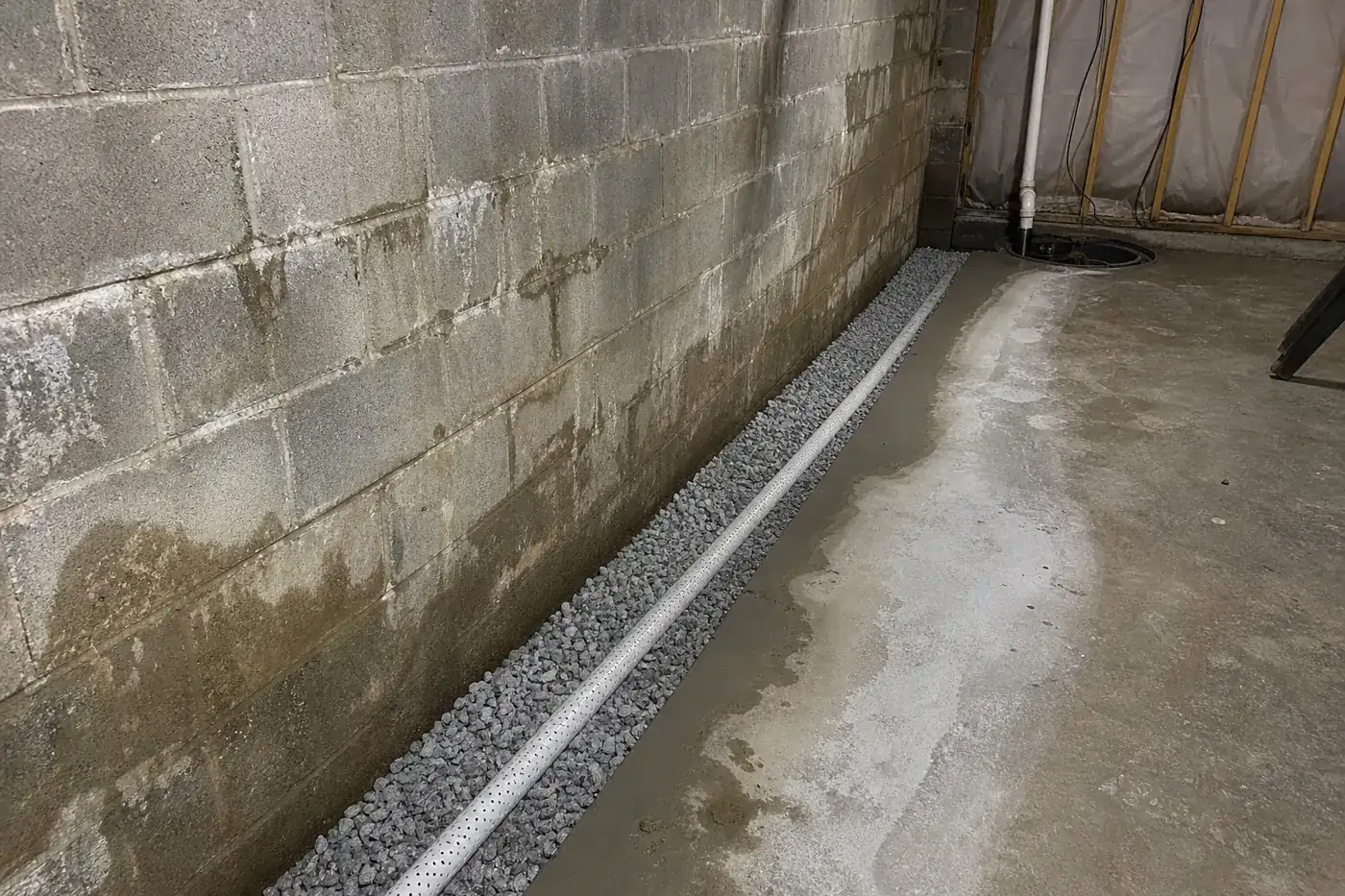
Why does the uphill wall leak first?
Rain that falls above your house soaks in and moves downslope through the soil until it meets something solid: your basement wall. With 41.3 inches of precipitation a year at the airport station (NOAA), that wall stays wet for long stretches. The water collects against it, builds pressure and finds the weakest point, usually the cove joint where wall meets floor, then mortar joints, tie holes or cracks.
Stone, brick, block or poured: why it matters
- Stone and brick. Water moves through mortar joints across the whole wall face. Repointing helps the wall; interior drainage handles the water.
- Concrete block. Hollow cores fill with water and release it low on the wall. Drainage at the base, sometimes with weep holes into the cores, is the usual fix.
- Poured concrete. Leaks tend to follow individual cracks, which suits injection at $250–$800 per crack (HomeGuide).
Inside drain or outside dig?
An interior system cuts a channel along the inside base of the leaking wall, lays perforated pipe in gravel and sends the water to a sump; HomeGuide puts interior French drains at $4,000–$17,000 depending on length. Exterior work digs the uphill side down to the footing, adds drain pipe and a membrane at $4–$7 per square foot plus $30–$90 per linear foot for the drain. On a steep lot with retaining walls and stairs, exterior work can be hard to reach, but it keeps water off the wall entirely.
Cheap steps that help first
Clean gutters, extend downspouts well away from the uphill side, and look for a slope that drains toward the house. HomeGuide puts replacement downspouts at $220–$625 and regrading at $1,000–$5,000. Waterproof paint at $2–$10 per square foot can help with dampness, but HomeGuide notes it won't stop water under pressure. Compare all options in the Pittsburgh basement waterproofing cost guide.
Questions homeowners ask
Can I just seal my basement walls from the inside?
For light dampness, a masonry sealer or waterproof paint can help. For water that runs in after rain, it rarely lasts: HomeGuide notes sealers won't stop water under pressure, and on a hillside the uphill wall often has plenty of pressure behind it. Drainage, inside or out, is what handles a real leak.
Where is the water getting in?
A sentence or two helps: water along the uphill wall after rain, a stone wall shedding sand, a sump that runs all spring, a crack that has grown. One independent basement specialist who works in Pittsburgh will get in touch.